
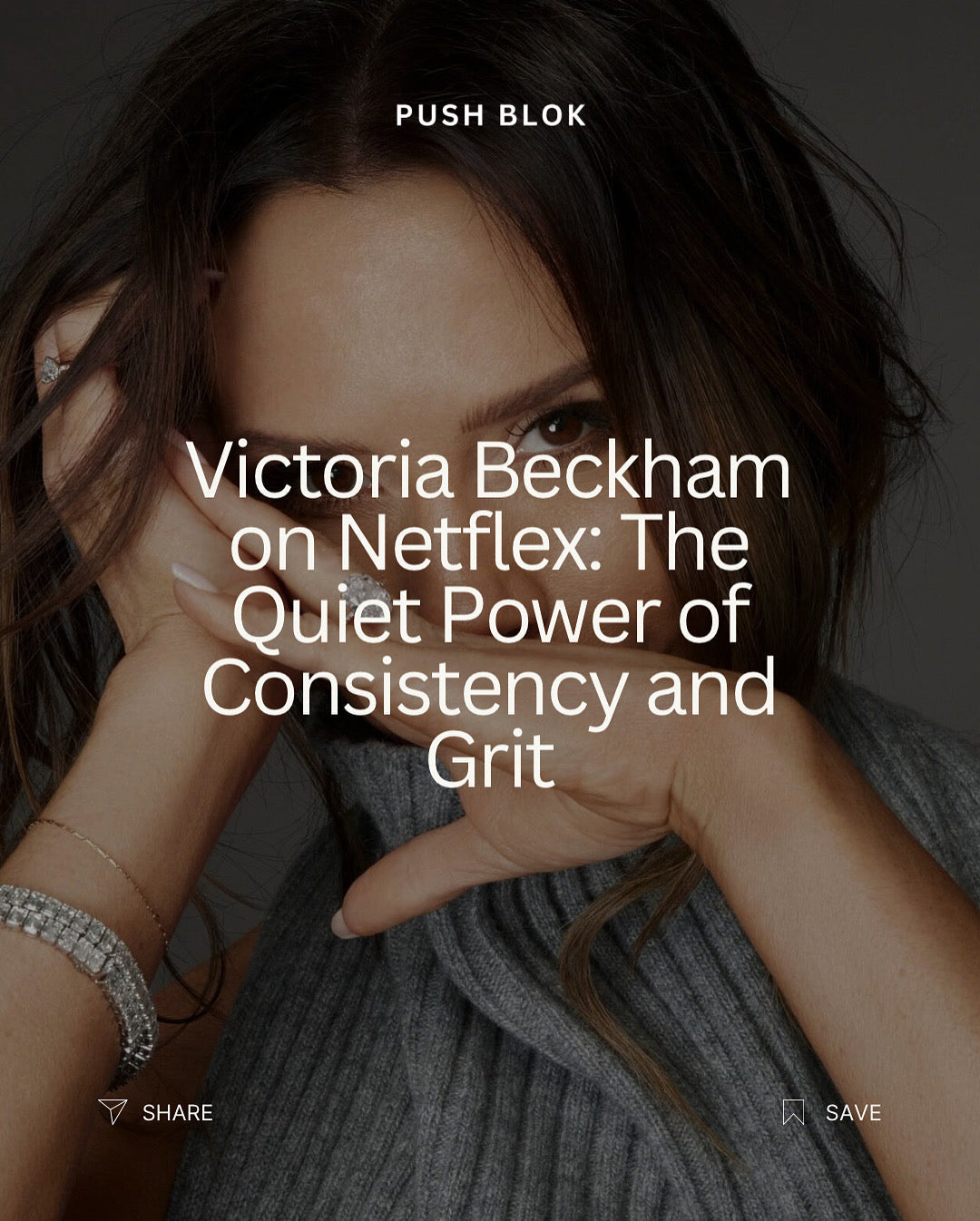
In October 2025, the world gets a rare behind-the-scenes look at Victoria Beckham’s life and career with her three-part documentary series on Netflix. Initially known to many as “Posh Spice” of the legendary Spice Girls, she has since transformed herself into a luxury fashion and beauty entrepreneur. The docuseries charts this evolution: from pop-star beginnings, through the public and private challenges of building a fashion label, to the present-day businesswoman preparing for Paris Fashion Week and beyond.
What stands out in her story is not glamour alone — but the power of consistency, the grit of daily work, and the steadiness of a long game. In this blog, let’s explore three core themes illustrated by Victoria’s journey, and see how they apply to entrepreneurs, creatives, or anyone building something that matters.
1. From Pop Star to Fashion Mogul: Reinvention Through Consistency
Victoria’s shift from pop music to the fashion world is a vivid example of reinvention — but not instant success. The series highlights early setbacks in her fashion brand: criticisms, financial losses, being “the laughing stock” in some circles. Yet instead of giving up, she kept showing up: going into design meetings, running her atelier, making the tough choices of business. As she told ELLE: “I think work makes me the best version of me.”
Takeaway: Reinvention isn’t magic—it’s persistence. When you want to move from one field to another, or shift the direction of your business/brand, the consistent daily steps count more than the occasional flashy leap.
Practical strategy:
- Write down one small goal each day that aligns with your bigger ambition (e.g., “research fabric suppliers”, “draft Instagram storyboard”, “reach out to one new contact”).
- After one month, evaluate progress—not just big wins—but how much you showed up.
- Accept that early phases may look awkward or unpolished; what matters more is that you didn’t stop.
2. Work Ethic: The Invisible Engine Behind the Brand
The documentary captures the unglamorous side of building a luxury label: choosing fabrics at dawn, coordinating models, worrying about the show music, fixing logistics. As Victoria says: “I had to leave my vanity at the door… I couldn’t think about the fact there were cameras there… I was like, ‘Guys, I’ve got a day job to be getting on with.’”
Her company reportedly turned a corner after years of operating losses. It didn’t happen because she was famous—it happened because she treated the business like a business, not a celebrity hobby.
Takeaway: Talent and recognition can open doors—but they won’t sustain a brand. The day-to-day grind, discipline, and systems are the engine.
Practical strategy:
- Create a weekly schedule dedicated to activity that matters for long-term growth (e.g., brand-building, product development, marketing).
- Logging routines helps: track your hours spent on “core work” vs. distractions. Over time you’ll see where the gaps are.
- Recognise “below the radar” wins: a 10-minute improved process, a better supplier relationship, a clearer strategy meeting—they all add up.
3. Holding the Line: Consistency Over Time & The Long Game
One of the most compelling aspects of Victoria’s story is time. She has been in the fashion industry for almost two decades. She was under fire early on, and at times labelled “vain” or “just a celebrity with a brand”. But she didn’t disappear—it didn’t all collapse—and she didn’t rest on the Spice Girls legacy. Instead she built something credible.
Consistency over time also meant evolving: as she put it, “there’s a side of getting older that’s really great… the filter comes off, and you give a shit less.” In other words: staying consistent doesn’t mean being rigid—it means being steadily committed, open to evolution, still showing up when the spotlight dims.
Takeaway: The biggest advantage in business is being the one who stays. Our friends may pivot, quit, lose momentum. If you endure—and keep adapting—you build a strength that many admire but few actually have.
Practical strategy:
- Set a 3-year vision for your brand or project: where you want to be, what you’re known for. Then break it down into yearly, quarterly targets.
- Celebrate “milestone minutes” (for example: your 1,000th Instagram post, your 100th client/project, your 5th year doing something). Recognise progress.
- Expect ups and downs. When things are hard, remind yourself: “This is part of the timeframe.” Consistency means showing up in the good and the bad.
Why This Matters to You (Especially in Lifestyle / Fashion / Brand Building)
Given your work (for instance: fashion, content, brand building) you’ll see how Victoria’s story intersects with your context:
- If you’re working on content (like Instagram reels, stories, etc.), you’ll know that big viral hits are nice—but steady output builds the algorithm, the audience, the engagement.
- If you’re building a brand (e.g., eyewear for women, beauty products, etc.), then the business is more than the “launch day”—it’s the repeated touch-points, the product quality, the customer experience, the narrative.
- Her background shows that reputation matters—but it’s maintained more than it’s achieved. In brands, consistency builds trust; trust builds loyalty; loyalty builds longevity.
The new Netflix docuseries on Victoria Beckham offers more than celebrity voyeurism—it offers a case study in building something meaningful with staying power. The key lessons:
- Show up even when you’re not sure anyone is watching.
- Do the unglamorous work—it’s what holds the brand together.
- Give time a chance: 1 year is not enough; 5 years is better; 10 years even better.
- Evolve, but stay rooted in your core.
- Let consistency be your secret weapon.
As you continue working on your blog strategy for your eyewear brand, or content for your fashion/beauty projects, ask yourself: “What’s the routine I can maintain? What’s the habit I can build? How will I tell the story not just once, but twelve months from now?” The answers may not come overnight—but every day you show up, you’re building.
0 comments